Plastic Pollution Worksheet: Trace the Sea Turtle – Free Printable 🌊
A one-page printable that combines environmental awareness with tracing practice: an underwater scene with a sea turtle and marine animals, drawn in dotted lines to trace. Children also circle the rubbish in red — especially the plastic bags — and see why they are a problem for the turtle.
The message is simple and concrete: a plastic bag in the ocean looks like a jellyfish, and turtles mistake it for food. The US Letter PDF with branding is free for everybody; the clean PDFs in US Letter and A4 are for Premium members.

🔍 Four tasks on one page
The worksheet asks for four things, in this order: trace the dotted marine elements, circle the rubbish in red, observe what happens to the turtle, and understand the cause-and-effect link between plastic bags and jellyfish. Movement, visuals and repetition — the three channels young learners use best.
Follow the dotted-line illustrations: marine elements and objects.
Circle the rubbish in red, especially the plastic bags in the scene.
See how plastic pollution affects the sea animals on the page.
Plastic bags can be mistaken for jellyfish by turtles: the core message.
🎯 Learning goals
Six objectives worked in one page, from motor skills to citizenship:
📘 The vocabulary on the page
👥 Target audience
Ages 3-6: tracing, circling, and a first eco-message with adult guidance.
The vocabulary and the cause-and-effect discussion go further at this level.
A calm, eco-themed activity: tracing and awareness in one page.
💡 Tips for classroom use
« What animals do you see? What should we NOT throw in nature? »
Let children follow the dotted lines with care, without rushing.
« Can you find all the trash? » — a visual search before circling.
After the activity, talk about using reusable bags at home.
📥 Download the worksheet
The free version carries our branding; the clean PDFs in US Letter and A4 are included in the Premium membership. Ready to use, no preparation.
Preview: the underwater scene, the turtle and the plastic bags
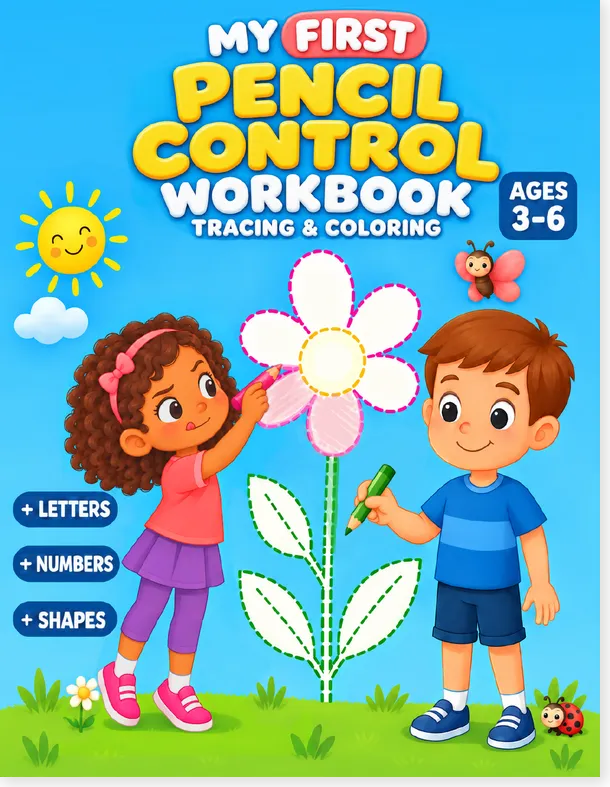
My First Pencil Control Workbook
for children ages 3–6
This workbook offers about 80 playful tracing and coloring pages based on themes children love: animals, vehicles, dinosaurs, ocean life, numbers and letters.
Perfect for practising pencil control, gaining confidence with pencils and markers, and developing fine motor skills while having fun.
What’s inside this workbook:
A helpful resource to keep children learning and having fun, at home or in the classroom.
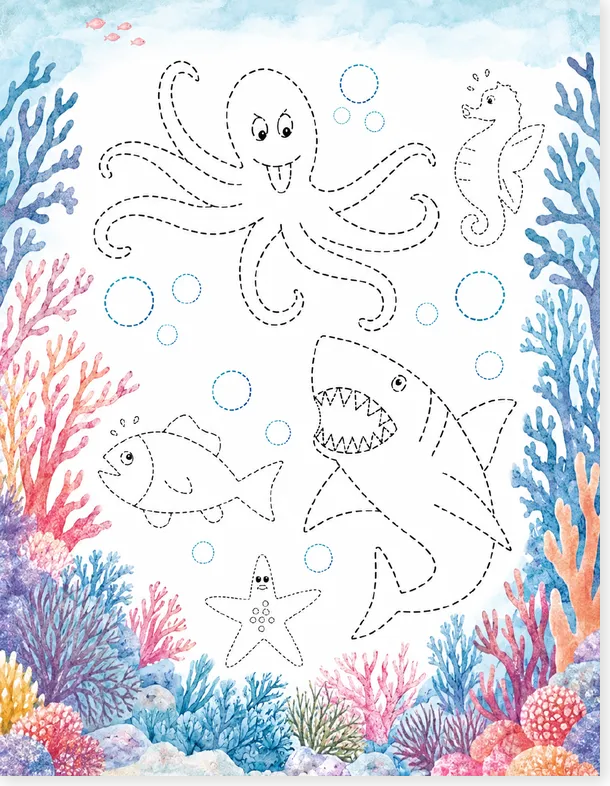
Recommended age, and more ocean pages
❓ Frequently asked questions
🧒 What age is this worksheet for?
Mainly preschool and kindergarten (ages 3-6). Grade 1-2 students can go further with the vocabulary and the cause-and-effect discussion.
🗂️ What does the worksheet contain?
One page: an underwater scene with dotted-line marine elements to trace, rubbish to circle in red (especially plastic bags), and a sea turtle facing a plastic bag that looks like a jellyfish.
🌍 What is the environmental message?
A simple cause-and-effect fact: plastic bags in the ocean can be mistaken for jellyfish by turtles. Circling the rubbish makes the problem visible before it is explained.
🖐️ What skills does it practise?
Fine motor skills and pencil control through tracing, visual discrimination (rubbish vs nature), ocean vocabulary, and early environmental awareness.
🎁 Which version is free?
The US Letter PDF with branding is free for everybody. The clean PDFs in US Letter and A4 are reserved for Premium members.
♻️ Can it be reused?
The tracing part can: laminated or in a plastic pouch, the dotted lines can be traced again with a dry-erase marker. The circling in red is done on a paper copy.