🔤French beginner vocabulary and writing
French Missing Letters Worksheets for Beginners
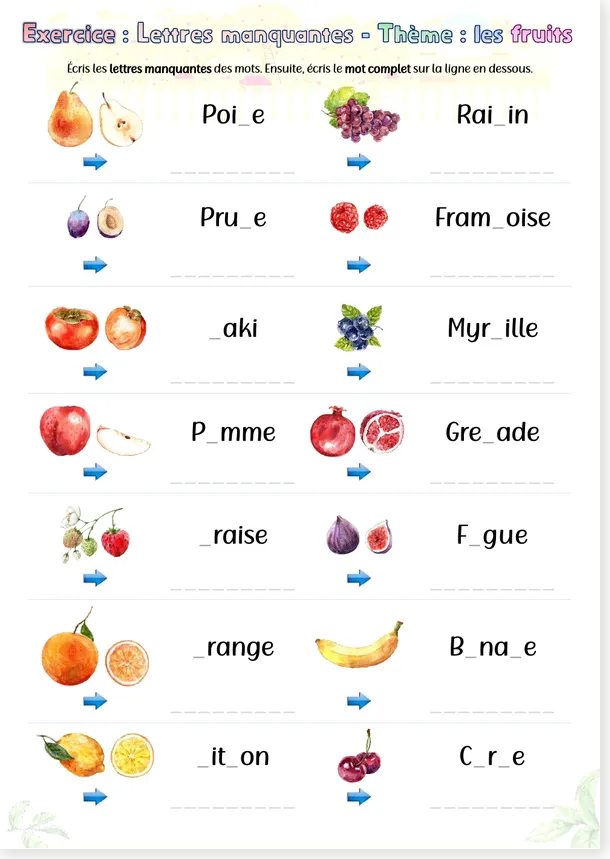
These printable French worksheets help beginners complete words by writing the missing letters, then copy the full word on the line below. It is a simple, reassuring activity for early reading, spelling, handwriting and vocabulary practice.
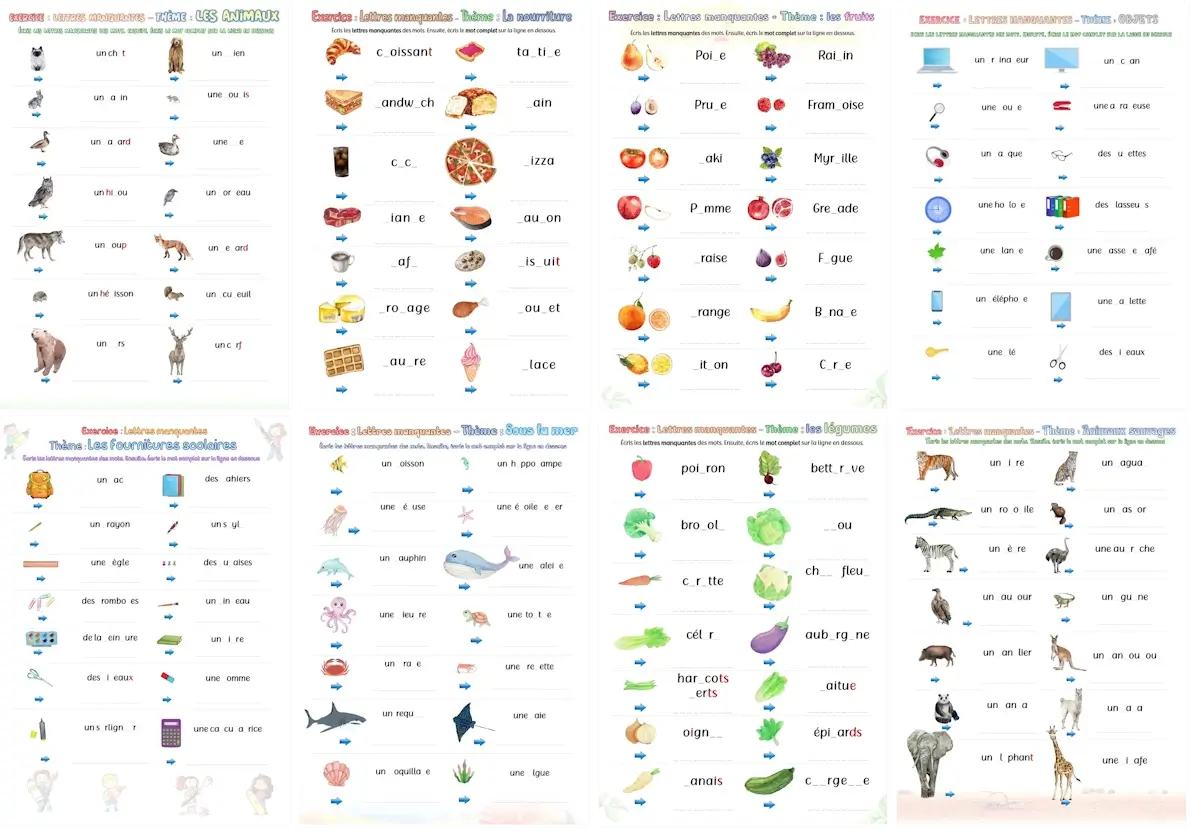
The collection is organized into 8 vocabulary themes: fruits, animals, vegetables, food, school supplies, objects, under the sea and wild animals. Most themes include both script and cursive versions, so teachers can choose the handwriting style that fits their learners.
Quick Navigation
Jump directly to the theme you need.
Skills Practised
Identify letters
Learners spot the missing letters inside a nearly complete French word.
Observe the word
They connect the picture, visible letters and expected vocabulary item.
Copy the full word
Each item includes a line to rewrite the complete word after filling the gaps.
Memorize spelling
The image-word-letter routine supports vocabulary retention and early spelling.
🍎 1. Fruits
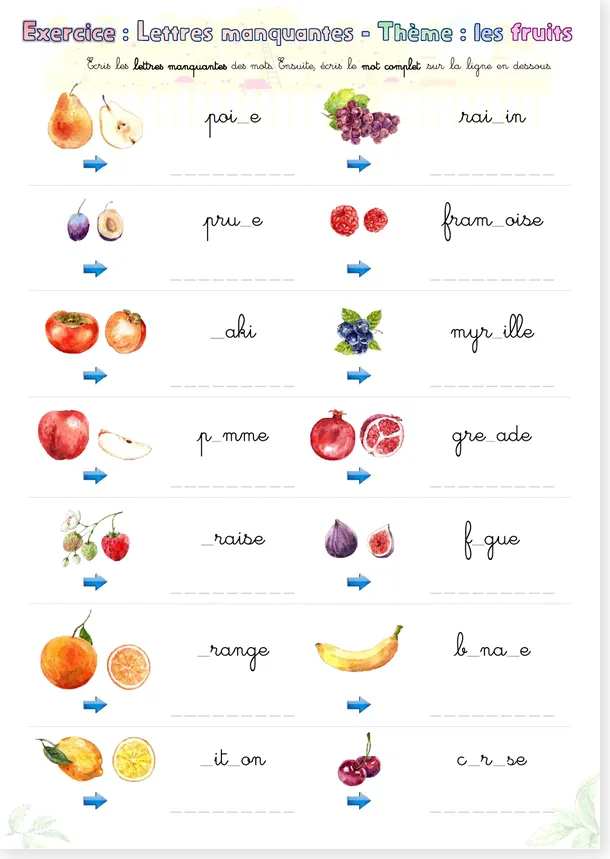
A friendly theme to start with. The worksheet includes common fruit words such as poire, raisin, prune, framboise, kaki, myrtille, pomme, grenade, fraise, figue, orange, banane, citron and cerise.
🐶 2. Animals
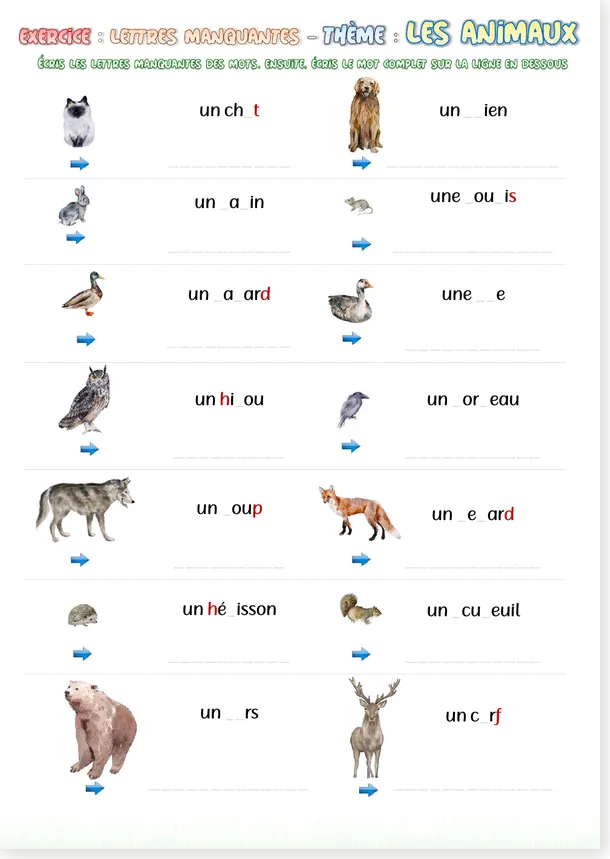
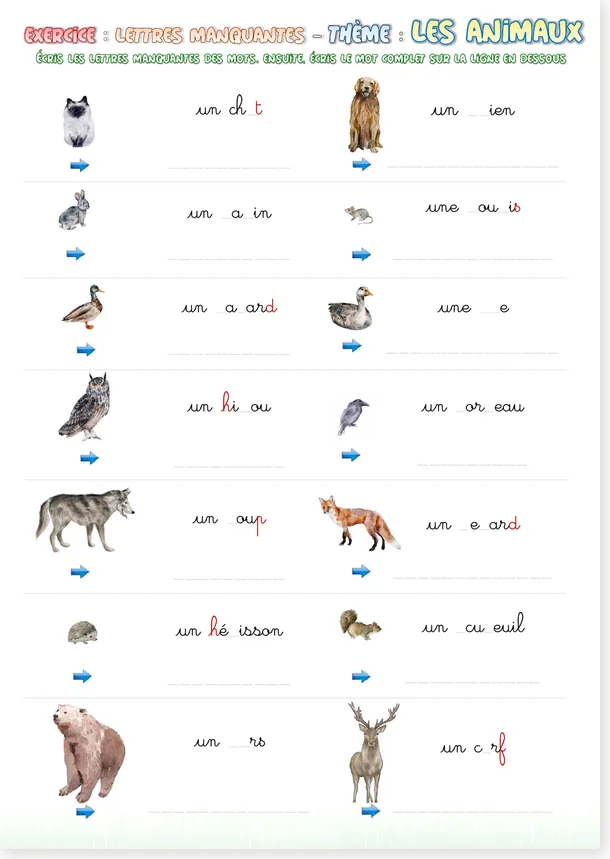
A motivating theme for young learners with familiar animals: chat, chien, souris, lapin, canard, oie, hibou, corbeau, loup, renard, herisson, ecureuil, ours and cerf.
🥕 3. Vegetables
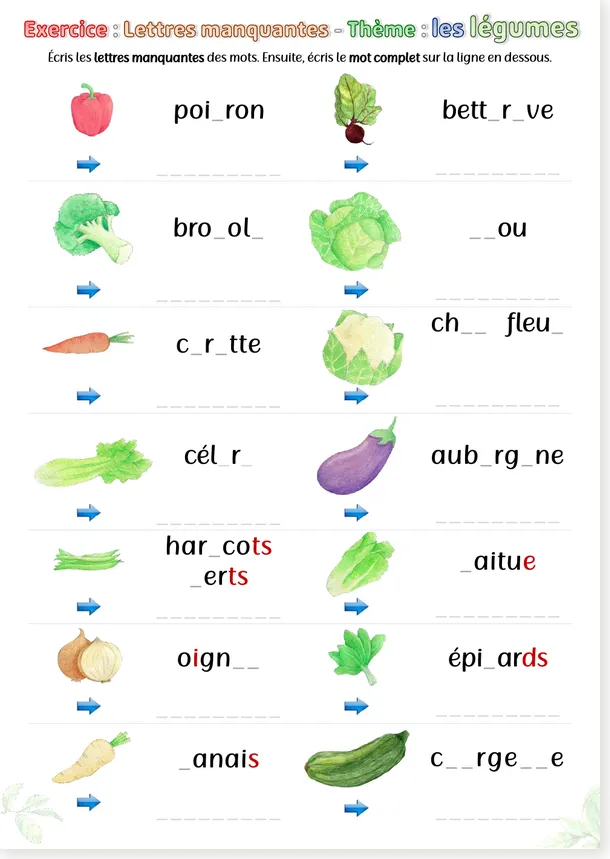
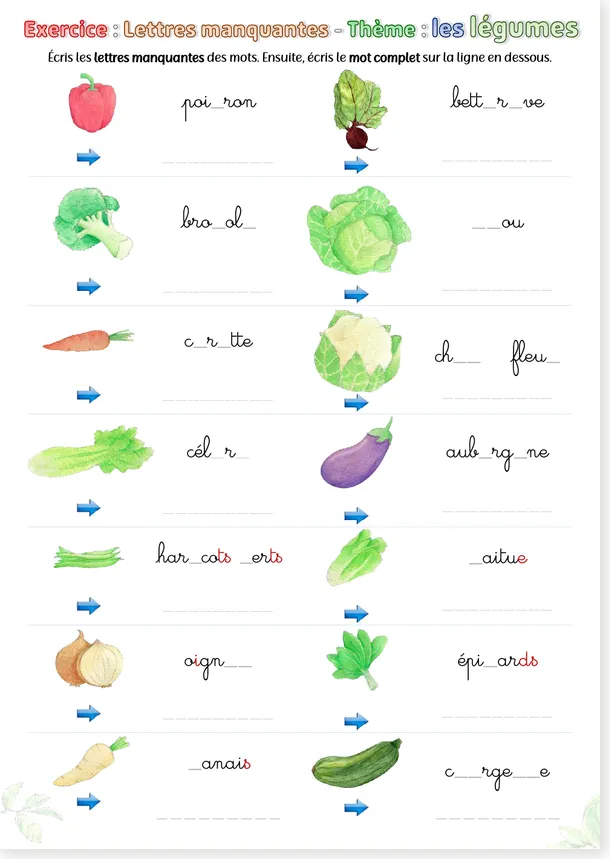
This theme extends food vocabulary with words such as poivron, betterave, brocoli, chou, carotte, celeri, aubergine, haricots verts, laitue, oignon, epinards, panais and courgette.
🥐 4. Food
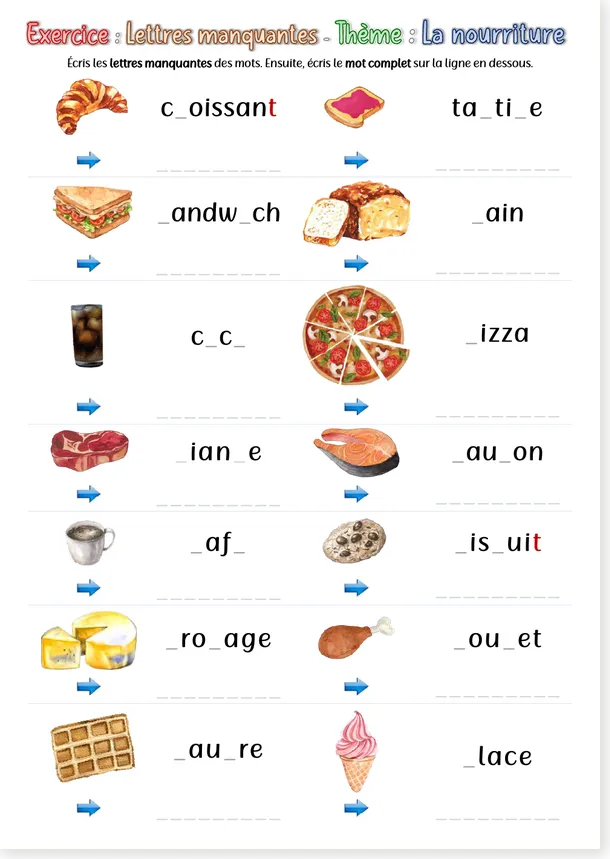
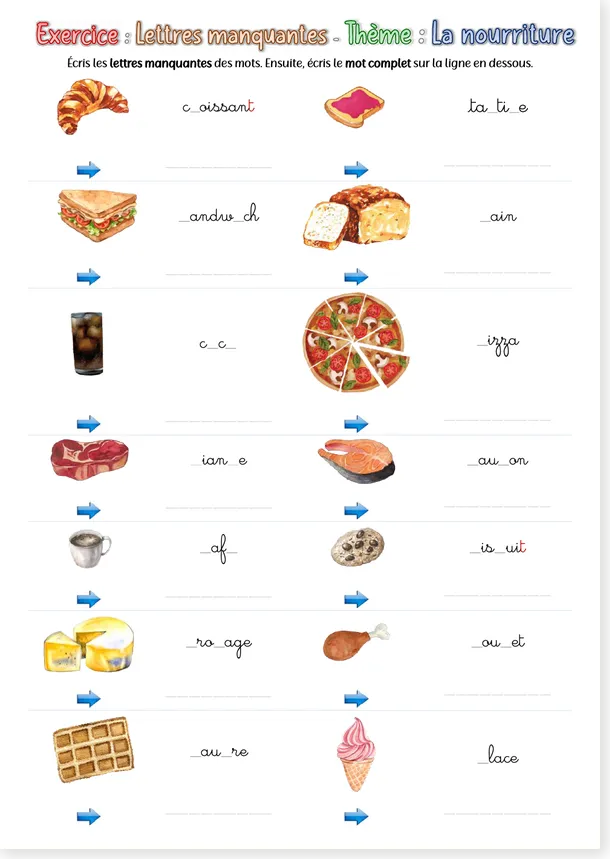
A practical general food worksheet with frequent words: croissant, tartine, sandwich, pain, pizza, coca, viande, saumon, cafe, biscuit, fromage, poulet, gaufre and glace.
✍️ 5. School Supplies
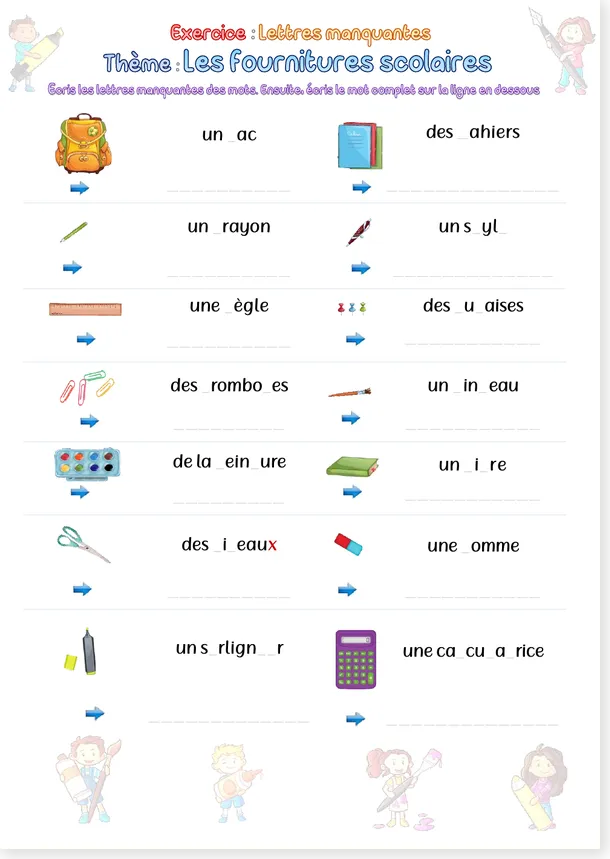
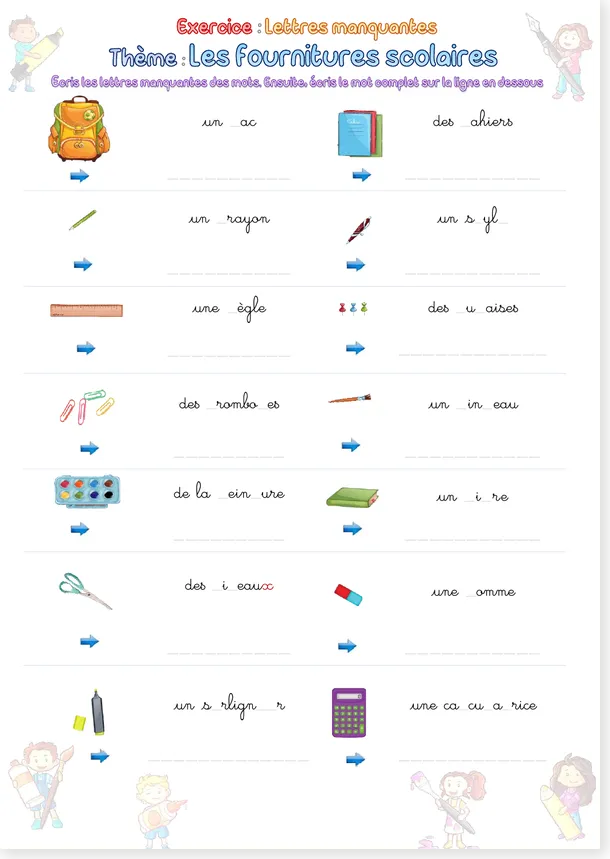
A useful classroom theme for back-to-school lessons and beginner French vocabulary: sac, cahiers, crayon, stylo, regle, punaises, trombones, pinceau, peinture, livre, ciseaux, gomme, surligneur and calculatrice.
🔑 6. Objects
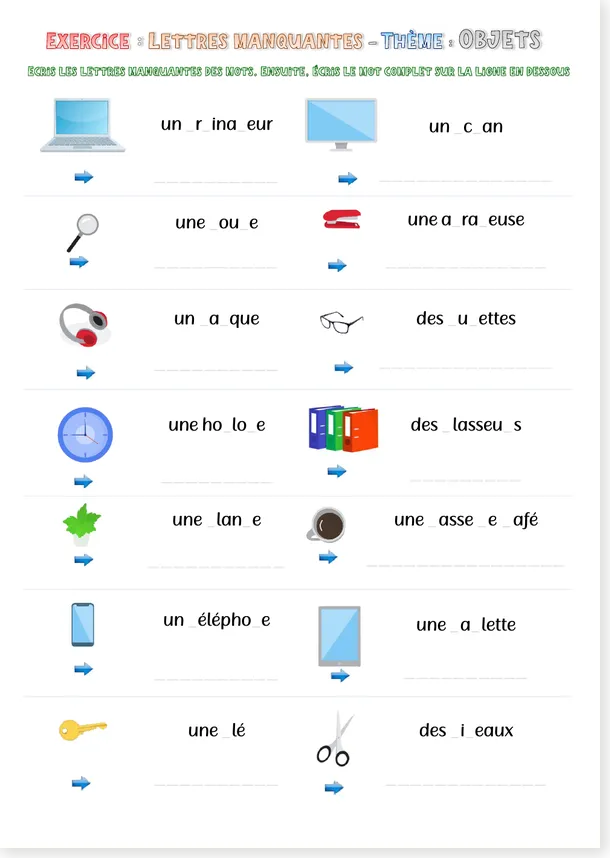
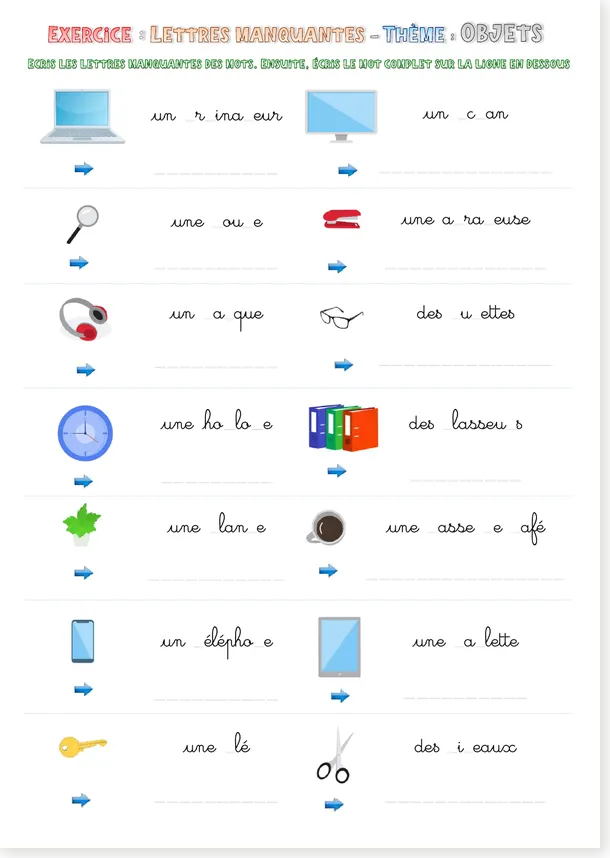
This everyday objects worksheet helps learners practise common classroom and home vocabulary, including words linked to technology, tools and familiar items.
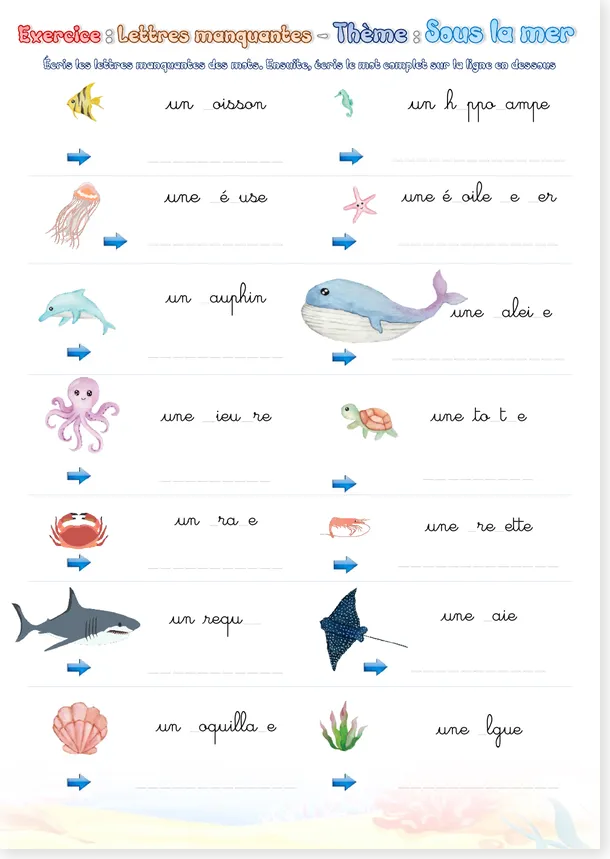
🐠 7. Under the Sea
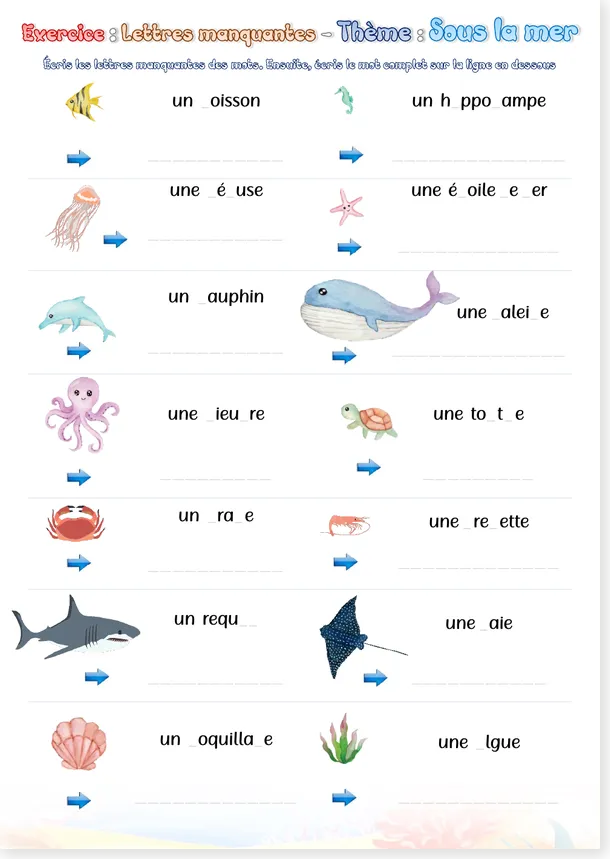
A visual and engaging sea theme: poisson, hippocampe, meduse, etoile de mer, dauphin, baleine, pieuvre, tortue, crabe, crevette, requin, raie, coquillage and algue.
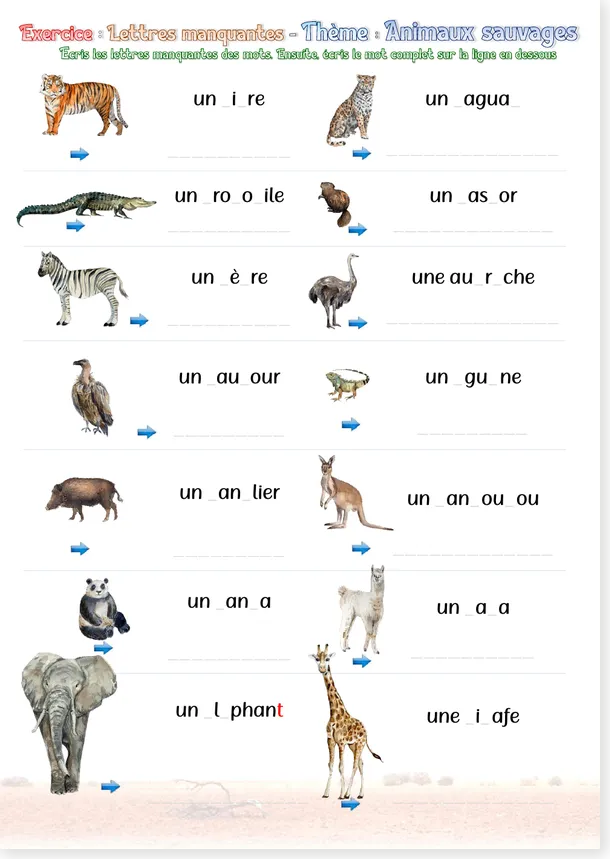
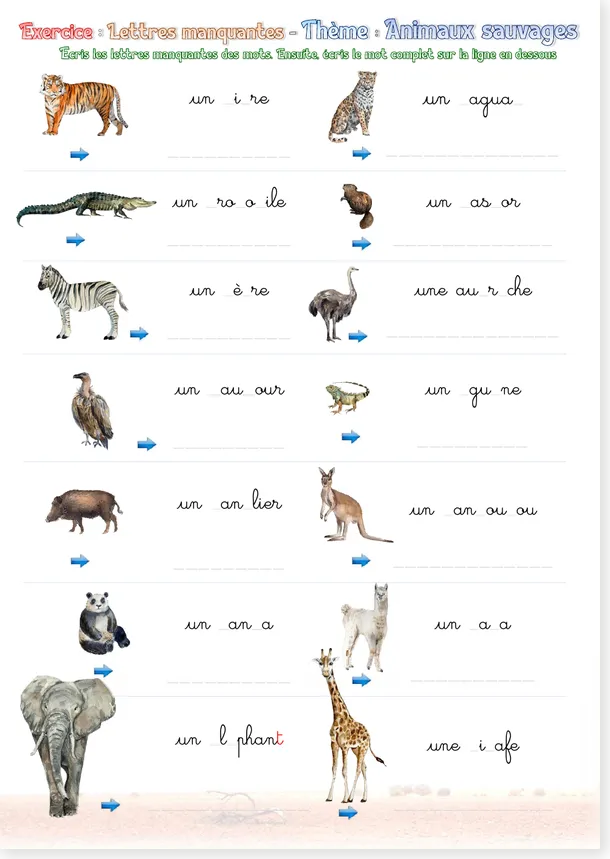
🦁 8. Wild Animals
A slightly richer vocabulary set with animals such as tigre, jaguar, crocodile, castor, zebre, autruche, vautour, iguane, sanglier, kangourou, panda, lama, elephant and girafe.
Why These Worksheets Work Well
The learner does not have to write the whole word immediately. First, they observe the picture and the visible letters, then they complete the missing letters, and finally they copy the full word. This progression builds confidence and makes spelling practice feel manageable.
The themes are concrete and illustrated, which makes the worksheets useful for French beginners, early readers, bilingual children, literacy support and FLE classes.
The Collection At A Glance
| Level | French A1.1-A1, beginner FLE, Pre-K to Grade 1, GS-CP, early literacy and reading-writing support. |
|---|---|
| Activity | Find the missing letters, complete the word, then copy the complete word on the line. |
| Themes | Fruits, animals, vegetables, food, school supplies, objects, under the sea and wild animals. |
| Formats | Most themes include script and cursive PDF versions. |
| Free samples | Fruits in script and animals in script are free for non-members. |
| Premium | Premium members can access the cursive samples and all remaining script/cursive worksheets. |
Frequently Asked Questions
Which worksheets are free?
The fruits script worksheet and animals script worksheet are free samples for non-members.
What is included for premium members?
Premium members can access the cursive versions of the free themes and the full set of premium themes in script and cursive.
What level should use these worksheets?
They are suitable for French A1.1-A1 learners, Pre-K to Grade 1 children, GS-CP pupils, bilingual learners and students who need support with reading and spelling.
What is the difference between script and cursive?
Script is easier for letter recognition. Cursive is better for handwriting practice and connected-letter writing.
How should I use these worksheets?
Start by naming the picture, then ask the learner to identify the missing letters, complete the word and copy the complete word on the line.