⚡ French Writing · A2-B1+ · Energy Savings
Good Habits to Reduce Your Water, Gas and Electricity Bills 💡
A French writing exercise on the cost of energy: a room-by-room infographic full of tips to cut your water, gas and electricity bills, followed by 9 questions to write about and then debate.
🎁 Free PDF download, with an editable DOCX version so you can adapt the questions to your group.
Contents
Before handing out the worksheet, start a discussion: how much does a month of electricity cost? Who has ever looked at a bill at home? The topic touches everyone, and opinions come quickly. Then it’s time to put them into writing.
The exercise at a glance
A cutaway house, room by room, with practical tips to cut water, gas and electricity bills.
Each learner describes their home, their habits and the habits they plan to adopt, in full sentences.
The questions lead to a discussion: should people be required to heat their home to 19°C max? Opinions will clash.
💡 A topical support: the cost of energy opens the door to debate on real-world issues and current affairs, in class or at home.
Good habits room by room
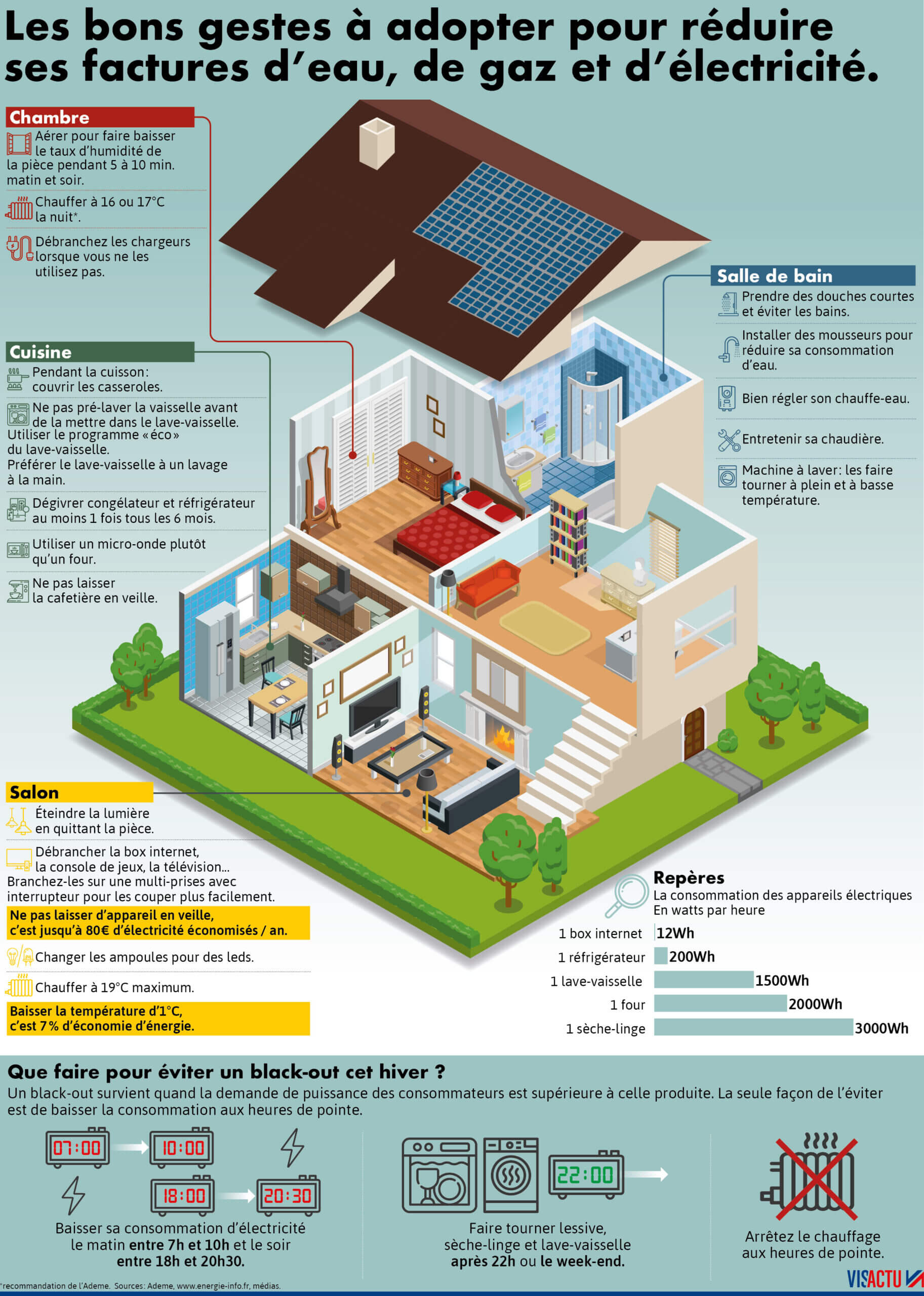
The infographic goes through the whole house: every room has its own energy-saving habits. Here is the essentials.
- Air out the room for 5 to 10 minutes, morning and night, to reduce humidity
- Heat at 16 or 17°C at night
- Unplug chargers when not in use
- Cover pots while cooking
- Use the dishwasher’s “eco” program, with no pre-rinsing
- Defrost the freezer and fridge at least every 6 months
- Don’t leave the coffee maker on standby
- Turn off the light when leaving the room
- Unplug the internet box, game console and TV on a switched power strip
- Switch bulbs to LEDs
- Heat at 19°C maximum
- Prefer short showers to baths
- Install faucet aerators to reduce water use
- Set the water heater properly and maintain the boiler
- Run full loads at low temperature
⚡ Numbers to remember: leaving appliances on standby can cost up to €80 a year. Lowering the temperature by 1°C saves 7% of your energy use.
🔌 Consumption benchmarks: internet box 12 Wh, fridge 200 Wh, dishwasher 1,500 Wh, oven 2,000 Wh, tumble dryer 3,000 Wh. And to avoid a blackout: cut consumption between 7 and 10 am and between 6 and 8:30 pm, and run laundry and the dishwasher after 10 pm or on weekends.
Every tip in the infographic becomes a starting point: which one do you already follow? Which one could you adopt? The worksheet’s questions turn these small habits into real sentences in French.
The 9 questions
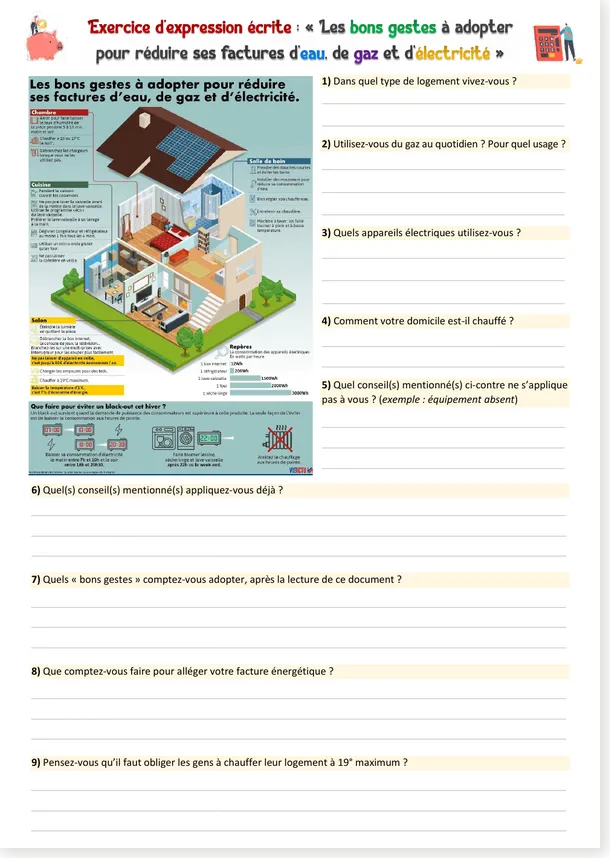
Nine written-expression questions, from describing your home all the way to debating ideas.
Goals and audience
- Written expression: describing your home and habits
- Giving your opinion and justifying it in full sentences
- Energy vocabulary: bills, appliances, heating, eco-habits
- Reading an infographic and practical tips
- Opening up to debate on current issues
- French learners at A2, B1 and above
- Teens and adults in group or individual lessons
- Teachers looking for a ready-to-use discussion support
- Conversation workshops or specific-purpose classes
In class: write and debate
- Have students answer the 9 questions in full sentences
- Project the full-size infographic on the board
- Note down new vocabulary before writing
- Use question 9 as a trigger: for or against 19°C?
- Compare habits across the learners’ countries
- Wrap up with a vote or a reasoned round table
📚 DOCX tip: the editable version lets you adapt the questions to your group’s level, add more, or simplify the wording.
A concrete topic, personal questions, real fuel for debate: in a single page, the worksheet moves from reading an image to expressing an opinion. Exactly the progression an A2-B1 group needs.
Preview and download
📄 Worksheet preview
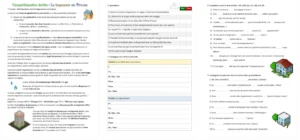
The complete worksheet: the infographic with the tips on the left, the 9 questions on the right.
Ready to print, in color or black and white.
🎁 Download the free PDF
The worksheet with the tips infographic and the 9 questions.
📝 Download the editable DOCX
To adapt the questions to your group.
Full-size infographic
For the exercise, here is the infographic in full size: handy to project on the board during the session.
Click the image to enlarge.
Print, project, hand out: the worksheet opens up a full session, from observing the image to debating ideas. A small gesture for the planet, a big step for French.