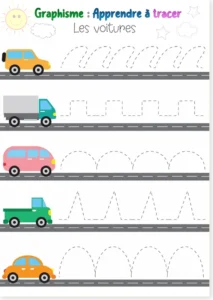
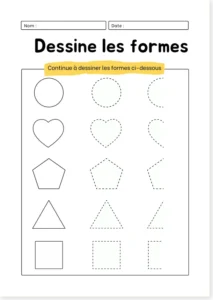
Animals That Fish Tracing Worksheet
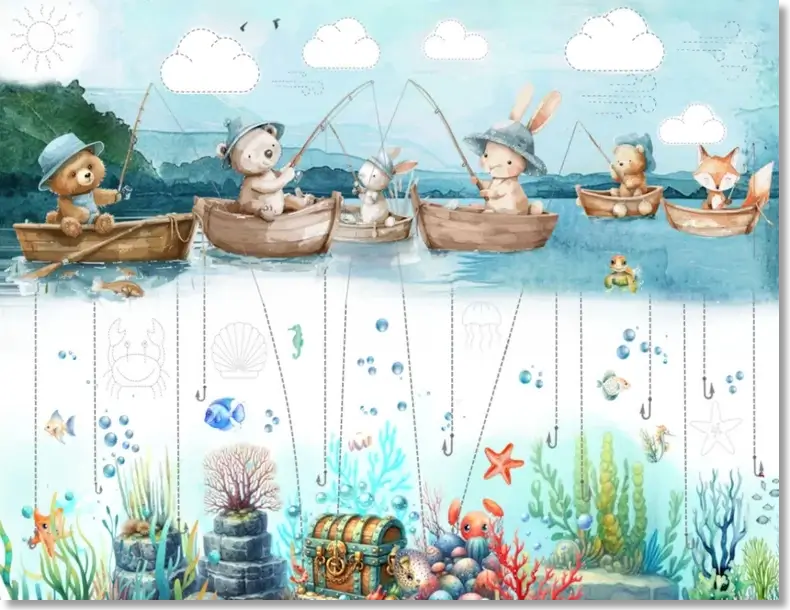
A group of little animals has gone fishing, but the lines still need to be finished! Children trace the dotted fishing lines, clouds, wind and sea shapes while exploring a gentle underwater scene.
There are no long instructions to read. The page is mostly visual, so it works nicely for young children, multilingual groups and learners who are still developing confidence with a pencil.
What children do on this worksheet
- Follow long vertical, curved and diagonal fishing lines.
- Trace simple outlines such as clouds, wind, a sun and sea creatures.
- Practise stopping at the hook or illustrated object.
- Move the pencil across a large page without the activity feeling repetitive.
Pencil control
Children practise following a path and adjusting the direction of their pencil.
Visual attention
Each line leads to a different place, which encourages careful observation.
A calm activity
The detailed fishing scene makes tracing feel more like a little visual adventure.
Also available in book format
French Reading and Writing Practice for Beginners
These worksheets are part of a broader French reading and writing approach for beginners: a practical book designed to support first steps in decoding, copying, vocabulary and early writing.
Color edition
Ideal for visual and engaging practice

Black & white edition
A printer-friendly version for regular use

Preview and download
The same activity is supplied in two printable formats. Choose A4 for most countries or US Letter for classrooms using North American paper.
💡 A simple classroom tip: let the child trace one or two paths first with a finger. Then offer a pencil, crayon or fine felt-tip pen. A short, successful session is often more useful than finishing every line at once.
Frequently asked questions
What age is this worksheet for?
It is best suited to children aged about 3 to 6. Younger children can trace a few of the larger paths, while older children can complete the finer shapes and longer lines.
Does the child need to read English?
No. The activity is almost entirely visual and can be used with children learning any language.
What skills does it practise?
It develops pencil control, hand-eye coordination, visual tracking and the basic movements needed before handwriting.
Which file should I print?
Use the A4 PDF in countries where A4 is standard. Choose the US Letter PDF for North American printers and paper.