The Ant and the Pigeon
Here is a short French tale that I particularly like for young readers. A tiny ant is saved by a pigeon. A little later, she has the chance to help him in return. The story is simple, easy to follow and gives us a nice opportunity to talk about kindness.
I also added a small colour code to make the French text less intimidating: silent letters are shown in grey, and some complex graphemes are coloured in green. The pictures do a lot of the work too, especially with children who are just beginning to read.

What you will find on this page
🐜A simple tale about helping one another
An ant falls into the water and nearly drowns. A pigeon sees her, drops a leaf into the water and helps her get back to safety. Later, the ant notices a hunter who is about to catch the pigeon. She may be tiny, but she reacts quickly and saves him.
🎨Visual support for early French reading
🔘 Silent letters in grey
If a letter is grey, the child knows that it is not pronounced. It is a simple clue, but it avoids quite a few hesitations.
🟢 Complex graphemes in green
Groups such as ou, on and an are easier to spot. Children can learn to see them as one sound instead of separate letters.
🖼️ Pictures that really help
The illustrations are not only decorative. They help children understand what is happening, even if they do not know every French word yet.
🗣️ A story to read together
You can read the more difficult sentences and let the child take over for a familiar word, a short phrase or a character name.
🧒Recommended age and level
💡Four simple ways to use the story
👀 1. Start with the pictures
Before reading, have a quick look at the illustrations. “What do you think is going to happen?” is already a good first question.
🤝 2. Take turns
Read the difficult parts yourself and leave a few easy words or phrases to the child. It feels much more relaxed this way.
🎨 3. Use the colours as clues
From time to time, ask what a grey letter or a green group means. Keep it light: the story should not become a test.
💗 4. Talk about the ending
Why did the pigeon help the ant? Why did she help him later? Children often have quite interesting answers to these simple questions.
Preview and downloads
The tale is four pages long. For a beginner, one page at a time is more than enough. You can always come back to the next page later.
Discover the work of Céline Alvarez
For this worksheet, I borrowed a few ideas from Céline Alvarez’s work, especially the use of visual clues during early reading. I find her books interesting because they remind us that a child does not need to be rushed. Reading can remain a calm and enjoyable moment.
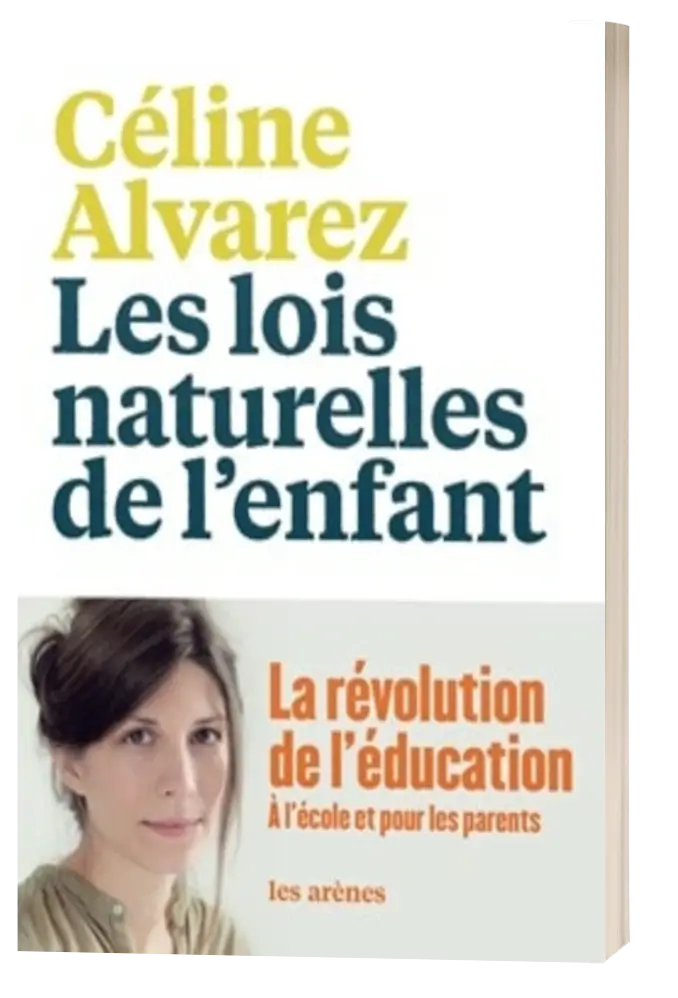
The Natural Laws of Children
A useful book if you want to understand her approach to learning, autonomy and early childhood education.
View the book on Amazon →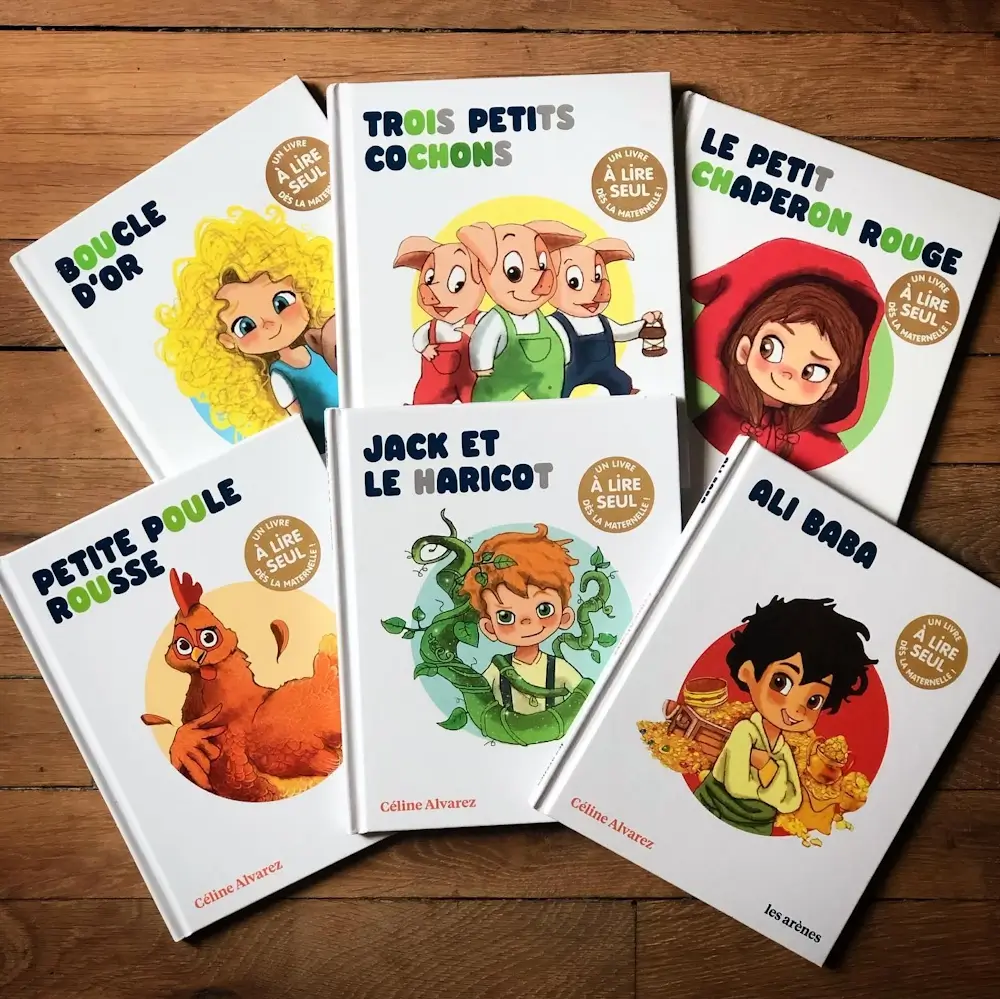
Natural Reading Stories
These illustrated stories can be a pleasant way to share a first French reading moment with a child.
View the stories on Amazon →Affiliate disclosure: the Amazon links above are affiliate links. If you purchase through them, I may receive a small commission at no additional cost to you.
Reading together at home
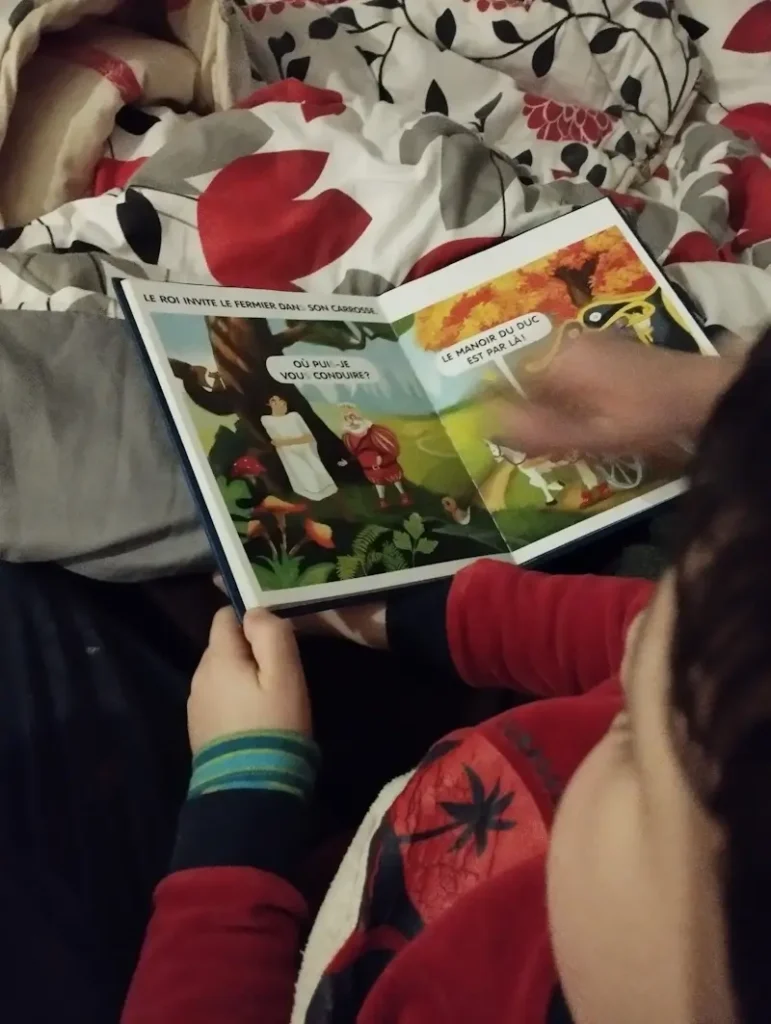
Here, you can see my five-year-old son reading a Céline Alvarez story with his mother before bedtime. This is the kind of reading moment we try to keep simple: no pressure, no long exercise, just a story shared together.
Not every evening needs to become a lesson. Sometimes we only talk about a picture, notice one familiar sound or read one sentence together. That is already useful.
Frequently asked questions
Is the French tale free?
Yes. The complete illustrated PDF can be downloaded free of charge. Premium members also receive the editable DOCX format.
How does the colour code work?
Silent letters appear in grey, while selected complex graphemes are highlighted in green to make them easier to notice.
Does a child need to read all four pages at once?
No. You can read one page at a time or share the reading between the adult and the child.